
Get in touch if you’ve got a story you’d like us to look into. Send a WhatsApp or send an email.
Skye councillor says £1m teacher recruitment fund is not enough
A Highland councillor says a new Scottish Government fund aimed at tackling teacher shortages in rural and island communities does not go far enough.
The £1 million Teacher Recruitment Assistance Fund (TRAF) will help teachers taking up posts with relocation and housing costs.
The Scottish Government says the fund is a pilot, with its impact to be monitored before decisions are made on future funding. It is part of wider measures to address teacher recruitment and reduce class contact time.
Skye councillor John Finlayson says the funding will not meet the scale of the challenge facing rural authorities.
He said:
“While I am delighted that finally consideration is being given by the Scottish Government to the unique and widespread challenges that rural authorities face, with the recruitment and retention of teachers for some subjects, £1 million pounds shared amongst the many councils who will be eligible to receive funding is not going to make the difference required.”
Teachers are also due to receive a further 90 minute reduction in weekly class contact time from August 2027 for primary teachers and from August 2029 for secondary teachers.
Councillor Finlayson says that could increase pressure on rural councils because more teachers will be needed to cover the same amount of classroom teaching.
He said:
“The added pressures that are also associated with a further reduction in class contact time for all teachers which will see a further 90minute reduction to 21 hours maximum class contact time, means more teachers will be needed across the whole country which I believe, will mean it will be even harder for rural authorities to recruit staff.”
He says the situation could eventually force councils to consider changes to how schools operate, including a shorter school week.
The Scottish Government says the recruitment fund is part of a wider programme of measures, including a minimum three year job guarantee for newly qualified teachers and plans to help established primary teachers gain additional registration.
Education Secretary Màiri McAllan said the Government must “continue our work to cut the costs of the school day for families” and that she would work with “young people, their families, the workforce, trade unions and local government to ensure every child receives the highest standard of education.”
]]>
Get in touch if you’ve got a story you’d like us to look into. Send a WhatsApp or send an email.
Knockbreck Primary School faces permanent closure
Highland Council is launching a consultation on proposals to permanently close Knockbreck Primary School.
The school shut temporarily in April 2024 because pupil numbers had fallen. The remaining children were transferred to other schools.
Since then, the Knockbreck has remained empty while council education officers carried out an initial review of the prospects for reopening.
The council says there are currently just six primary-aged children living within the Knockbreck catchment area.
It is now proposing to formally close the school and transfer the catchment area to Dunvegan Primary School, where a new school is planned.
Skye Councillor John Finlayson, chair of Highland Council’s education committee, said:
“Many people will have fond memories of Knockbreck, but while closure can bring a degree of sadness to a community, we also need to reflect on the best way to meet the educational needs of local children in the present day.
“Community engagement undertaken this year found no evidence of significant demand for the re-opening of the school and indicated that former pupils had settled successfully within other schools.
“The council sees the catchment change as a positive move which will bring social and educational benefits for current and future pupils, with local children very soon to have access to modern accommodation through the planned replacement Dunvegan Primary.”
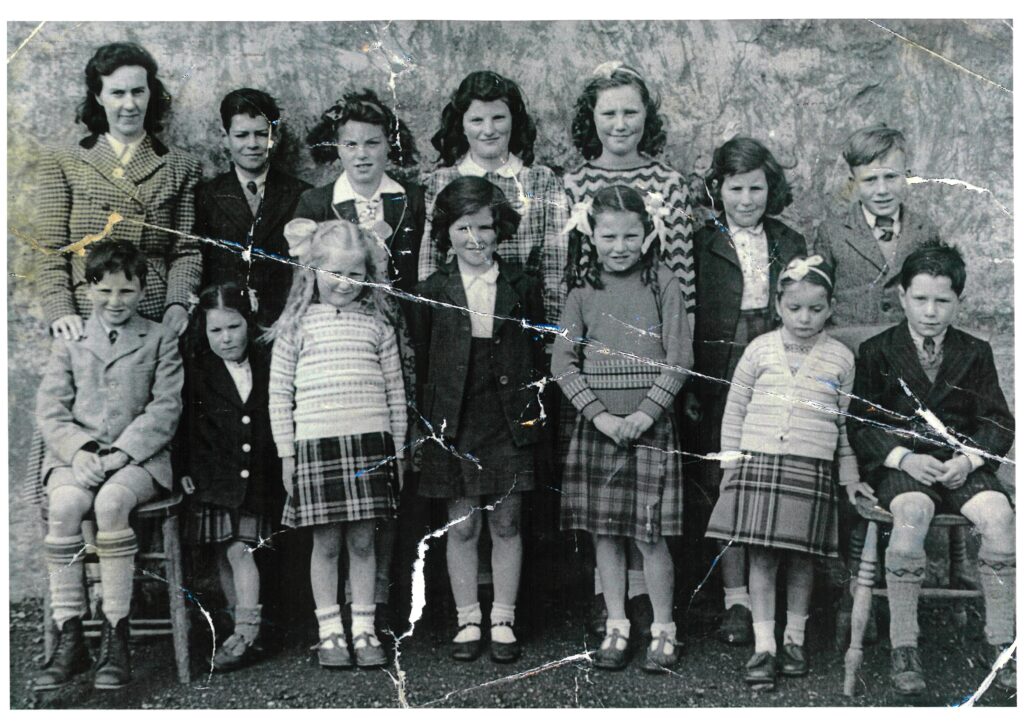
Pupils and staff at Knockbreck, 1948. Credit – Skye and Lochalsh Archive Centre
A long-running debate
The move follows a long running debate over the future of rural schools.
In 2015, Highland Council proposed closing four primary schools in the North West – Knockbreck, Dunvegan, Edinbane and Struan – and replacing them with a new central school at Dunvegan.
The proposals sparked significant opposition, with concerns raised about the impact of long journeys on young children and the future of small communities.
The dispute eventually became a landmark case in Scottish education law. Scottish Ministers called in the council’s decision and referred it to the newly established independent School Closure Review Panel, which rejected the proposals in its first ruling.
Highland Council subsequently challenged that decision at the Sheriff Court in Portree, but the appeal was unsuccessful.
More than a decade on, the council says changing demographics mean the situation is now very different.
Pupil numbers have fallen across a number of schools on Skye. Elgol Primary is one of many to be mothballed in recent years.
Meanwhile, Dunvegan Primary is due to be replaced with a new school, although the timetable remains subject to the progress of the wider school building programme. The project was previously expected to be completed around 2027.
Consultation opens in September
The statutory consultation on the proposed permanent closure of Knockbreck Primary School will run from 2 September until 30 October 2026.
A public meeting is also expected to be held during the week commencing 7 September.
The consultation will give local residents, parents and other interested parties the opportunity to respond to the proposal before any final decision is made.
For communities around the Waternish peninsula, the proposal could mark the end of more than 150 years of education at Knockbreck.
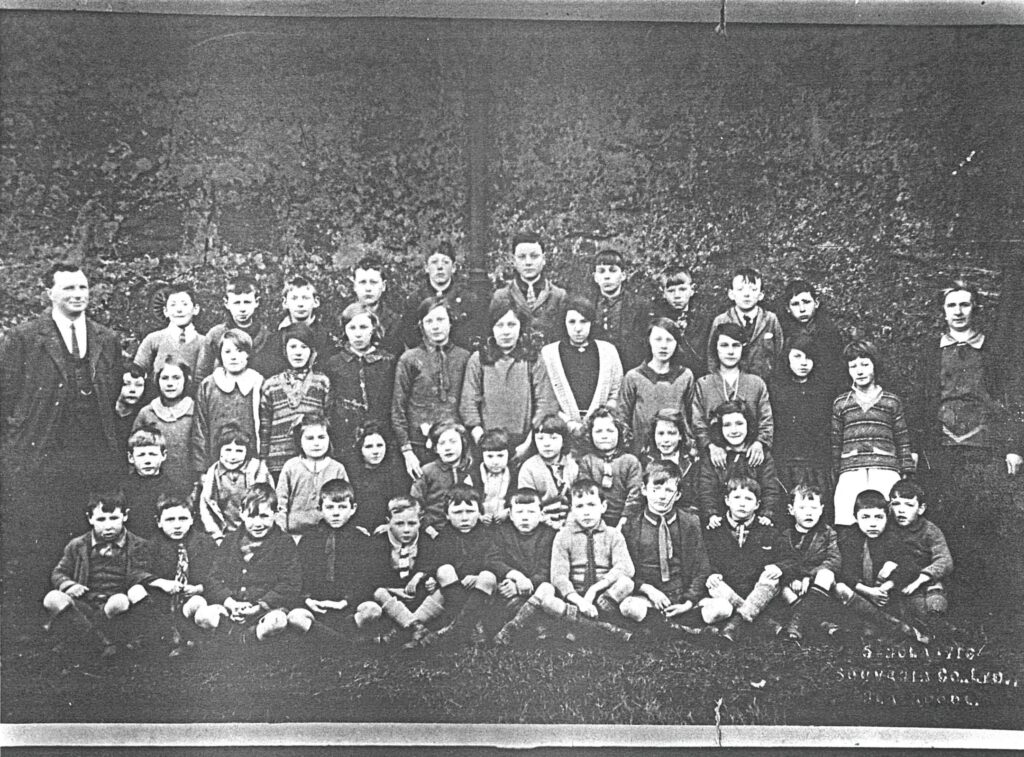
Knockbreck staff and pupils, 1930. Credit – Skye and Lochalsh Archive Centre
A school with deep roots
Knockbreck’s history stretches back to the late 1800s.
One of the last church schools in the area was at Geary. It continued until the Knockbreck school building was completed in the late 1870s, when its pupils moved to the new school.
The new Knockbreck Public School was built following the 1872 education reforms. Its design is attributed to Alexander Ross, the prominent Inverness architect whose work included a number of schools across the Highlands.
By 1877, Knockbreck had around 60 pupils attending regularly, a striking contrast with the six primary-aged children currently living in the catchment area.
The school’s records also provide a glimpse of the bilingual character of education in the area.
During the 1932-33 school year, His Majesty’s Inspector recorded that the younger pupils were equally fluent in English and Gaelic.
The school also had links with smaller facilities in the area. During the 1920s, a side school operated from a thatched house at Trumpan, but the building was judged unsuitable for teaching by 1924 and closed the following year. The roof collapsed not long afterwards.
Knockbreck in 1947
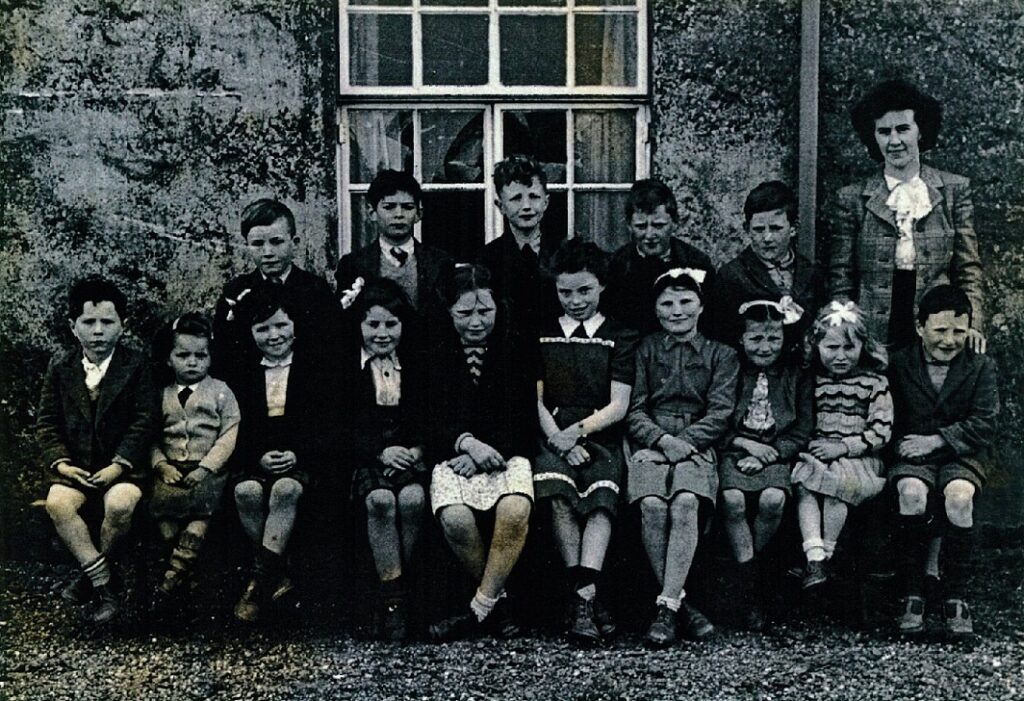
Pupils and staff at Knockbreck, 1947. Credit – Skye and Lochalsh Archive Centre
A photograph from 1947 shows a group of Knockbreck pupils and staff.
Back row, left to right: James Bain, Peter Nicolson, Neil MacKinnon, Ian MacSwan and Angus MacSwan.
Front row, left to right: Donald Nicolson, Wilma Bain, Margaret MacDiarmid, Wilann MacDiarmid, Greta MacKinnon, Margaret Bain, Mairi MacAskill, Fiona Robertson, Angie MacKinnon and John MacSwan.
Photographs and historical information supplied by Skye and Lochalsh Archive Centre.
]]>